By Terry Walker · ISTD Independent Ski Instructor & Off-Piste Guide · Val d'Isère & Tignes
The descent from Col Pers is one of the true crown jewels of off-piste skiing in Val d'Isère. Dropping from the high alpine border of the Vanoise National Park down through a majestic wilderness basin, it offers wide rolling powder bowls, breathtaking views, and an exhilarating sense of remote mountain exploration. However, beneath its beauty lies serious alpine terrain that demands respect, technical skill, and careful decision making.
* Avalanche Danger: The drop-in pitch is steep and convex, frequently wind-loaded with dangerous slab potential. Further down, towering canyon walls shed massive avalanches that can bury the gorge floor without warning.
* Blind Terrain & Getting Lost: The vast, rolling terrain makes navigation tricky. Taking a wrong line can draw you onto unskiable cliff bands and hanging cornices above the canyon.
* Zero Mobile Phone Reception: Once you drop past the col and into the valley, mobile phone reception is practically nonexistent. You cannot rely on a phone call for immediate help.
* Rushing Mountain River & Weak Snow Bridges: The gorge floor conceals a fast-flowing mountain torrent. Falling through a weak snow bridge into a deep, wet hole can be fatal.
* Impassable Gorge & Helicopter Rescue: If the lower Gorges de Malpasset is blocked, open with running water, or impassable, turning around is rarely possible. Your only way out may be calling an emergency mountain rescue helicopter.
* Mandatory Safety Gear: An avalanche safety transceiver (beacon), metal shovel, and probe are the non-negotiable minimums for every skier. You must also carry an offline topographic mapping device or paper map, and know how to read and use them under pressure.
Getting to Pisaillas: The Scenic Safari vs. The Fast Express
To start the descent, your goal is the top chairlift in the Glacier du Pisaillas sector. If you choose to ski over from Val d'Isère centre, it is a scenic ski safari that crosses the mountain via Solaise and takes in the famous Lessières chairlift. Often dubbed the world's most famous "up-and-over" chairlift, it crests a knife-edge mountain ridge with dramatic, stomach-flipping exposure before carrying you down into the Le Fornet ski bowl.
Alternatively, for the quickest access with fresh legs, hop on the free red shuttle bus from the village to Le Fornet. Take the high-speed cable car straight up, followed by the new Vallon gondola directly into the high glacier basin.
The Approach: The Triangular Marker & The 10-Minute Bootpack
From the top of the glacier lifts, head down towards the far skiers' right piste beneath Col Pers. Looking ahead, you will easily spot the distinct natural dip in the mountain ridgeline facing back towards Val d'Isère.
Ski along until you see a prominent triangular marker pillar right where the piste begins to flatten out. This is your staging area. Click out of your skis, hoist them onto your shoulder or secure them firmly to your backpack, and begin bootpacking up the steep mountainside towards the col.
The steep initial bootpack takes roughly 10 minutes of steady climbing. Once you crest the steep section, continue slightly higher along the crest of the ridge. Gaining this slight bit of extra altitude is the local secret: it gives you enough height and gradient to glide smoothly across the snowfield over to Col Pers proper, where a large ancient stone cairn marks the pass.
The Drop-In: Entry Conditions & Avalanche Assessment
Standing beside the stone cairn at Col Pers, you look down into the initial pitch. The entrance is extremely steep, frequently rocky, and commonly crowned with large, wind-sculpted cornices.
Snow conditions here demand precise, honest assessment. Early in the season or after dry spells, snow cover may be thin, exposing sharp rocks. Conversely, after fresh snowfalls or wind events, heavy wind-slab accumulations present an acute avalanche hazard down the convex face. Carefully evaluate the snowpack, check your sluff, and drop in with absolute precision.
Rolling Powder Bowls & Avoiding the 1km Flat Drag
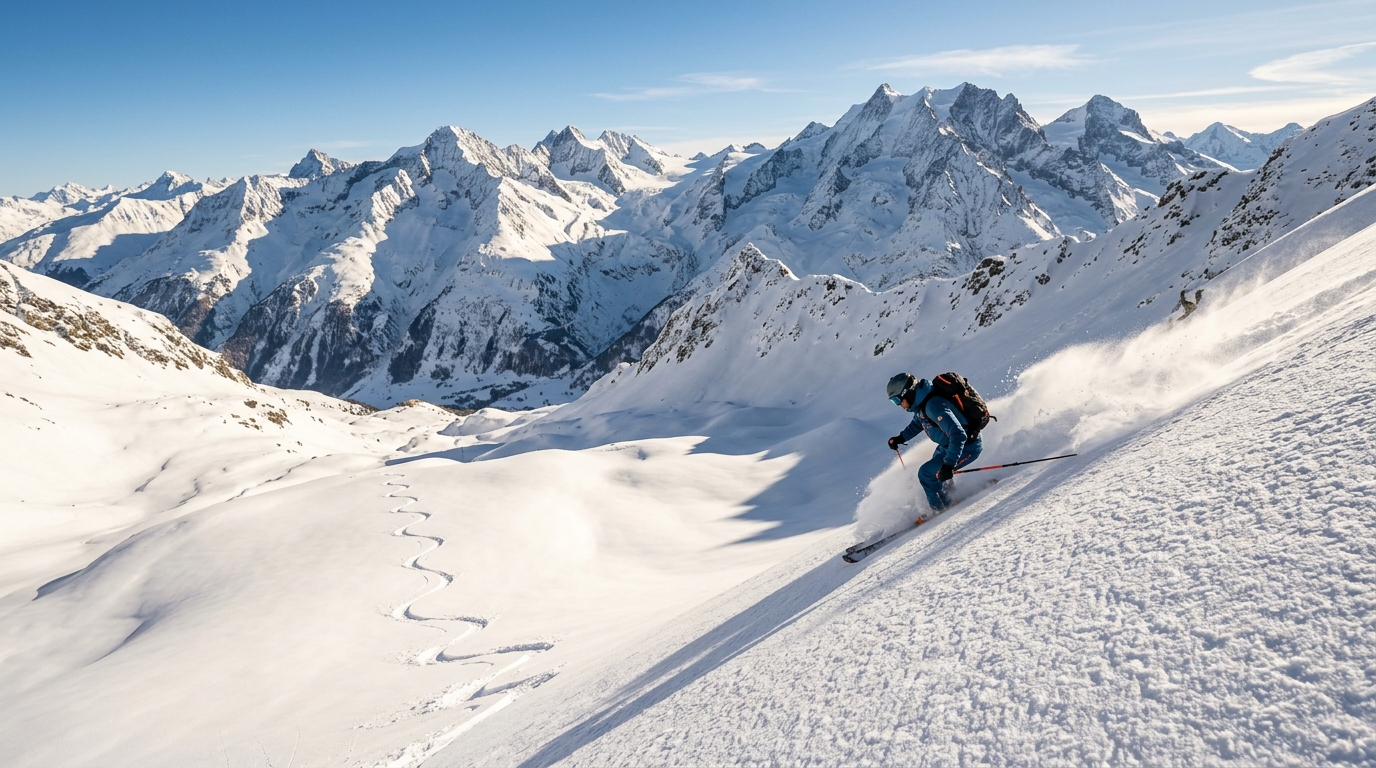
Once you clear the steep opening pitch, the mountain opens into a magnificent amphitheatre. The terrain rolls gracefully over natural hummocks, benches, and wide open powder bowls. Because of the sheer expanse of the basin, there is almost always room to find untracked lines and pristine snow days after a storm.
Insider line choice: As you descend, maintain your speed and tend towards skiers' right. Roughly one kilometre into the run, the valley floor levels out into a massive flat section. In deep, heavy powder, getting bogged down here is exhausting and can turn into a grueling pole-pushing struggle. Staying higher to the right allows you to carry momentum effortlessly.
The Crucial Fork: Grand Torsai vs. Gorges de Malpasset
As you approach the lower end of the upper basin, you reach the most important decision of the descent. You have two distinct exit routes: traversing left into the Grand Torsai, or committing to the fall-line down into the wild Gorges de Malpasset.
Exit A: The Grand Torsai Traverse (The "When in Doubt, Go Left" Rule)
For the Grand Torsai exit, watch for the "last get-out left" where you traverse directly underneath a small rock cliff band. If you skied too low or lost speed on the flats, this will require some sidestepping or a short 10-minute bootpack back up to the traverse line.
Once on the traverse, stay very far left. Drop down through the gully, and keep holding your line to the left. The golden rule here is simple: if in doubt, go left. Straying to the right will pull you onto dangerously steep slopes and hanging cornices that drop precipitously into the gorge below.
Holding left brings you down gentle rolling slopes onto the natural exit of the Vallonnet route, leading smoothly and safely down to Pont Saint-Charles.
Exit B: The Gorges de Malpasset Fall-Line (The Wild Canyon Adventure)
If you choose not to traverse left, follow the natural fall-line straight down towards the bottom of the valley. From above, the line can feel intimidating and somewhat blind to navigate, but the snow terraces and ramps are well negotiable for confident off-piste skiers.
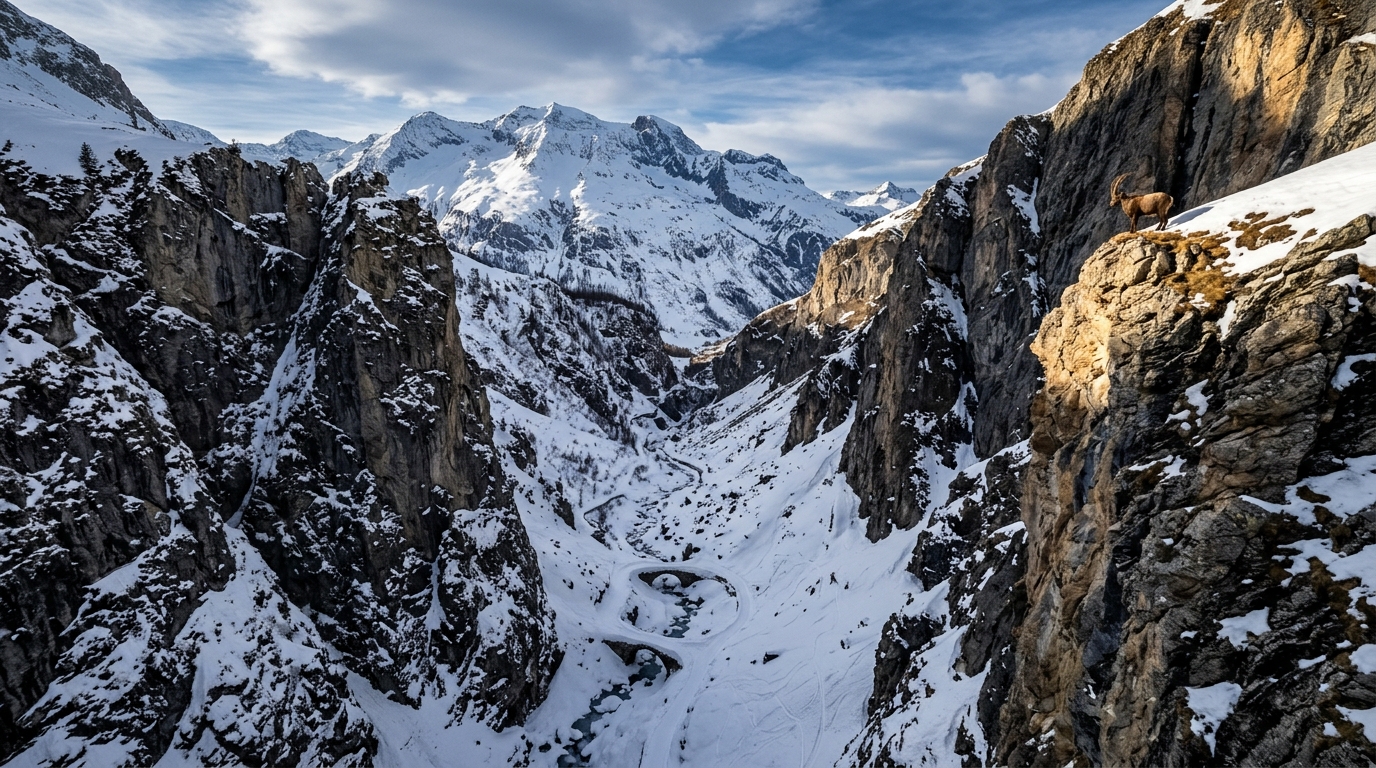
Head into the narrow canyon of the Gorges de Malpasset. In this deep gorge, vigilance is paramount. Massive avalanche paths sweep down from the towering rock faces on both sides, frequently choking the gorge floor with heavy debris. Furthermore, a fast-flowing river runs beneath the snowpack. Watch carefully for open water, collapsing snow bridges, and deep wet holes.
Wildlife reward: As you navigate the gorge, look high up to the sunlit rock crags on your right. This canyon is a prime sanctuary for Bouquetin (Alpine ibex), often seen perching effortlessly on impossibly sheer rock ledges.
The ultimate consequence: If the gorge becomes blocked by open water or impassable ice, climbing back out is virtually impossible. Calling an emergency mountain rescue helicopter becomes the only option. When the snow bridge holds firm, you will ski straight out onto the road at Pont Saint-Charles, ready to catch the free shuttle bus back to Le Fornet and Val d'Isère.
Why Ski Col Pers with a Private Off-Piste Guide?
While Col Pers is a classic itinerary, its blind entries, river hazards, and avalanche traps require seasoned mountain knowledge. Skiing with Terry Walker guarantees professional snowpack evaluation, expert line selection, optimal safety pacing, and secret powder stashes, ensuring you experience the magic of this descent with complete peace of mind.
Ready to Ski Col Pers & Explore Val d'Isère Backcountry?
Book private off-piste guiding and technical coaching with independent British ski instructor Terry Walker.
Terry Walker
Highest-qualified British ISTD ski instructor and off-piste specialist based in Val d'Isère, dedicated to safe, exhilarating backcountry adventures and technical mastery.